
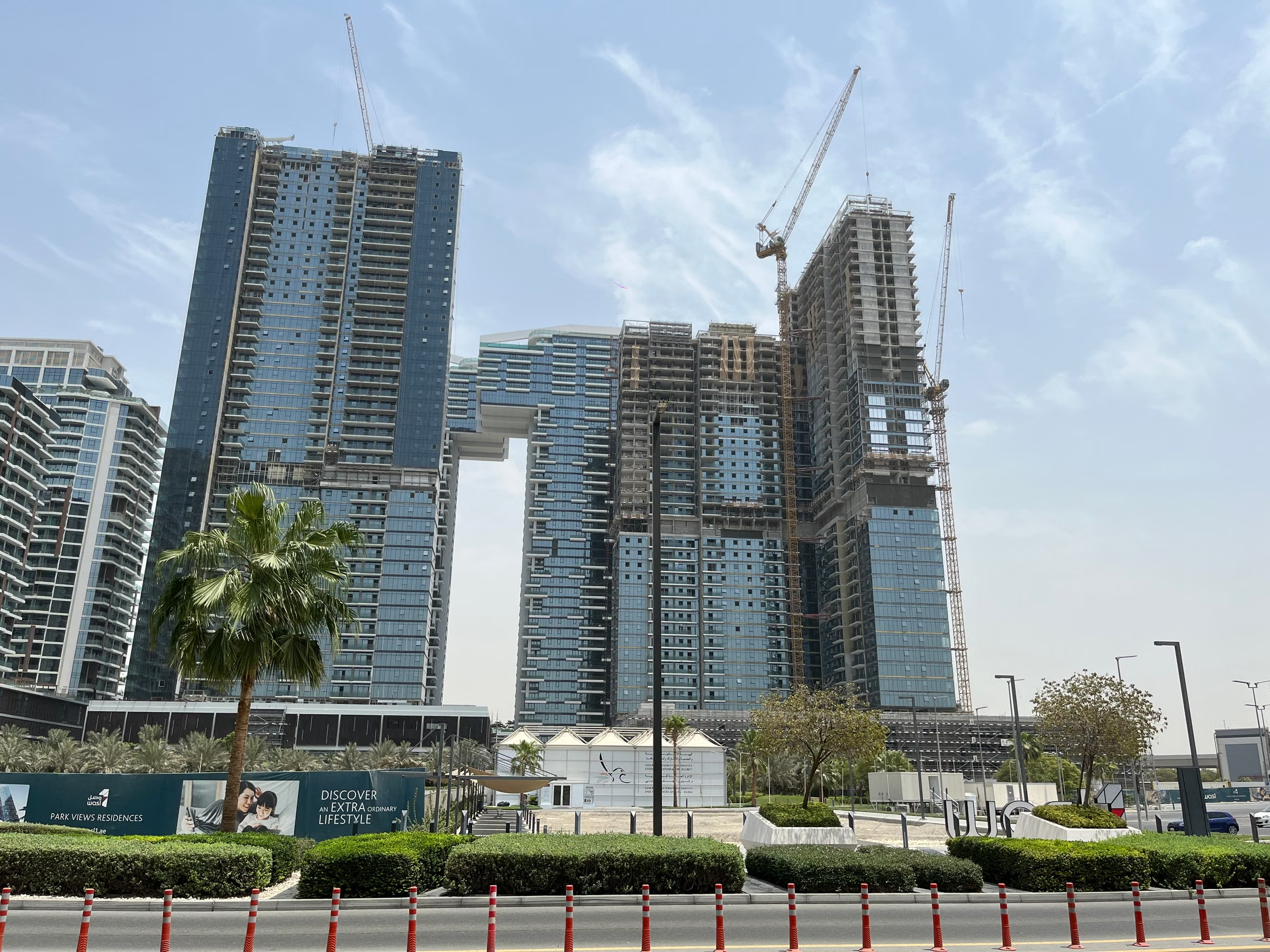
Completed property and construction-stage buying involve different commitments. With a ready home you can usually inspect the actual premises. With off-plan property the contractual specifications, developer execution and payment timetable play a larger role. Neither is automatically a better investment.
To compare fairly, choose two particular units of similar size and location. Review documentary certainty, timing, ownership costs, possible income and your ability to cope if events do not happen as projected.
1. Compare verifiable property facts, not brochure promises
For a finished unit, check the seller's legal authority, registered ownership, current tenancy, physical condition and service-charge records. An inspection can reveal actual light, noise, materials and the upkeep of common spaces, but it does not replace title and legal checks.
For an off-plan unit, verify the exact developer and project registration with Dubai Land Department, the project escrow arrangements, the contractual specifications, instalment schedule and defined handover requirements. A visualisation is not the same thing as a legally binding description of what will be delivered.
Questions worth asking
- Which facts can be independently checked today?
- Does the agreement match the promised finishes and unit layout?
2. Model when money is due—not only the headline price
Completed-property transactions may require a substantial amount on the transfer date: price or mortgage down payment, registration and trustee costs, and any other applicable professional charges. Off-plan sales may distribute payments between reservation, construction stages and handover. A smaller booking deposit does not mean the full purchase is less costly.
Prepare separate timelines for each candidate, including all government charges and realistic financing assumptions. Stress-test a delayed mortgage approval, a delayed handover and the possibility that you cannot resell at the anticipated price. Check the applicable DLD procedures for each transaction type.
Questions worth asking
- When is the single largest instalment due?
- Could you still pay if mortgage or asset-sale proceeds were late?
3. Estimate the date when income can actually begin
A vacant finished home may be rentable once it has been prepared and the correct tenancy process is completed. An existing tenant can introduce different terms and timing. Neither marketing rent nor advertised gross yield should be treated as cash already earned.
An off-plan property generally cannot earn residential rental income while construction is ongoing. Projected post-handover yields are assumptions. Reduce anticipated rent for realistic vacancy, management, leasing, maintenance and service charges, then compare the two options on the same capital basis.
Questions worth asking
- When might the first rental payment realistically arrive?
- What happens if achieved rent is lower or letting is delayed?
4. Understand construction and completed-building risks separately
Off-plan buyers face delivery and developer-performance uncertainty, potential contractually permitted specification changes, and rules regarding cancellation, payment defaults or assignment. Official registration and escrow protection are valuable but do not guarantee punctual completion or a positive investment outcome.
Completed buildings have their own risks: cooling-system failures, hidden defects, deferred major works, tenant obligations or changes in nearby supply. An independent building survey and up-to-date ownership records provide better evidence than a general claim that ready property is risk-free.
Questions worth asking
- What downside scenario would materially affect your finances?
- Can you obtain an independent condition or legal review?
5. Check service charges and exit flexibility
Dubai Land Department's official Service Charge Index helps buyers identify approved charges for jointly owned properties by specific building, usage and year. Do not assume every tower in the same district costs the same. New off-plan service-charge figures may remain projections until approved.
Selling a property partway through your plan may require further checks. For a ready home, a mortgage or tenancy could influence transfer. Off-plan contracts can contain assignment conditions and developer consent or payment requirements. Read these terms before assuming you can exit whenever you choose.
Questions worth asking
- What annual cost remains even if the property is vacant?
- Which permissions or costs apply if you sell earlier than planned?
6. Decide using a five-part comparison scorecard
Assess each actual unit using five criteria: the strength of title and contract evidence, total cash-flow timing, realistic date of use or rental, ongoing operating expenses, and flexibility if your goals change. Hold location, currency, usable area and rent assumptions reasonably consistent.
Ready stock may be better aligned with immediate occupancy or earlier rental evaluation. A carefully documented off-plan purchase may suit a buyer with a longer horizon and capacity for construction uncertainty. The correct choice is the one you can afford under a cautious scenario—not the one with the most attractive optimistic forecast.
Questions worth asking
- Does the investment still work in a slower, lower-income scenario?
- What unanswered question would change your decision?
Key takeaways
- Inspect and verify the title, condition and operating costs of completed property.
- For off-plan, verify DLD project registration, escrow, sale agreement and specifications.
- Compare every instalment and the timing of total cash requirements.
- Avoid counting rental income before a home can actually be leased.
- Review service charges, assignment permissions and contract exit provisions.
- Choose the unit that still fits your objectives in a conservative scenario.
Continue researching
Official resources and verification
Use current official records for project-specific or time-sensitive information. This guide is general information, not legal, tax or investment advice.